
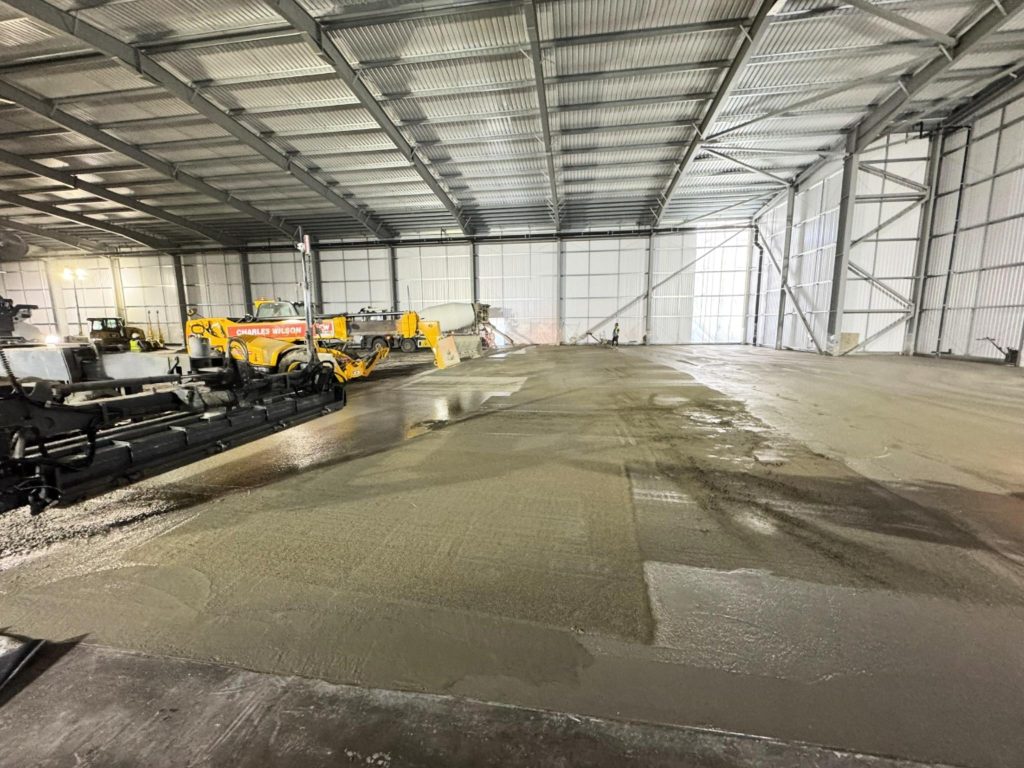
Expert Strategies to Avoid Cracking, Spalling, and Uneven Surfaces
Concrete flooring is a staple in industrial and commercial spaces due to its durability and cost-effectiveness. However, without proper construction and maintenance, these floors can develop problems like cracking, spalling, and uneven surfaces. Understanding these issues and how to prevent them is essential for maintaining a safe and efficient environment. This article highlights common flooring problems and how CivPoint LTD can help you avoid them through expert Quality Assurance.
Common Concrete Flooring Issues and Their Causes
1. Cracking
- Causes:
- Shrinkage: As concrete dries, it can shrink and crack if not properly cured.
- Thermal Changes: Temperature fluctuations cause expansion and contraction, leading to cracks.
- Structural Loads: Excessive weight or impacts can exceed the floor’s capacity.
- Prevention:
- Proper Curing: Maintaining adequate moisture levels during curing reduces shrinkage.
- Reinforcement: Using steel reinforcement or fibres enhances tensile strength.
- Control Joints: Strategic placement of joints allows for controlled cracking.
2. Spalling
- Causes:
- Freeze-Thaw Cycles: Water entering the concrete and freezing causes the surface to flake.
- Chemical Exposure: Harsh chemicals can degrade the concrete matrix.
- Poor Finishing: Overworking the surface can weaken the top layer.
- Prevention:
- Air Entrainment: Incorporating air bubbles in the mix helps accommodate freeze-thaw expansion.
- Protective Sealants: Applying sealants guards against chemical intrusion.
- Proper Finishing Techniques: Avoiding over-troweling preserves surface integrity.
3. Uneven Surfaces
- Causes:
- Subgrade Settlement: Inadequate compaction of the base leads to uneven settling.
- Improper Screeding: Inaccurate levelling during placement creates surface variations.
- Warping and Curling: Differential moisture loss causes edges or corners to lift.
- Prevention:
- Subgrade Preparation: Ensuring a stable, well-compacted base is crucial.
- Accurate Placement: Using laser-guided equipment improves levelling precision.
- Balanced Curing: Uniform curing minimizes moisture differentials.
The Importance of Quality Assurance
Implementing a robust Quality Assurance program helps prevent these issues by:
- Ensuring Material Quality: Verifying that concrete mixes and materials meet specifications.
- Monitoring Construction Practices: Overseeing workmanship to ensure adherence to best practices.
- Conducting Inspections: Identifying potential problems early through regular checks.
- Providing Expertise: Offering guidance on techniques and materials suited to specific project needs.
CivPoint LTD: Your Expert in Concrete Flooring Solutions
CivPoint LTD brings extensive experience in preventing and addressing concrete flooring issues. Our Quality Assurance services ensure your floors are constructed to the highest standards.
Our Services Include:
- Comprehensive QA Planning: We develop tailored QA plans addressing the unique aspects of your project.
- On-Site Supervision: Our professionals oversee construction to ensure correct procedures.
- Advanced Testing: We utilize cutting-edge testing methods to verify material performance.
- Post-Construction Support: Offering maintenance strategies to prolong floor lifespan.
Conclusion
Preventing common concrete flooring issues requires a combination of proper design, skilled execution, and ongoing quality control. By partnering with CivPoint LTD, you can ensure your industrial or commercial floors remain durable, safe, and functional.
Invest in Quality Flooring Today
Reach out to CivPoint LTD to discover how our Quality Assurance services can benefit your next project.
Strong foundations for successful operations—trust CivPoint LTD with your concrete flooring needs.