
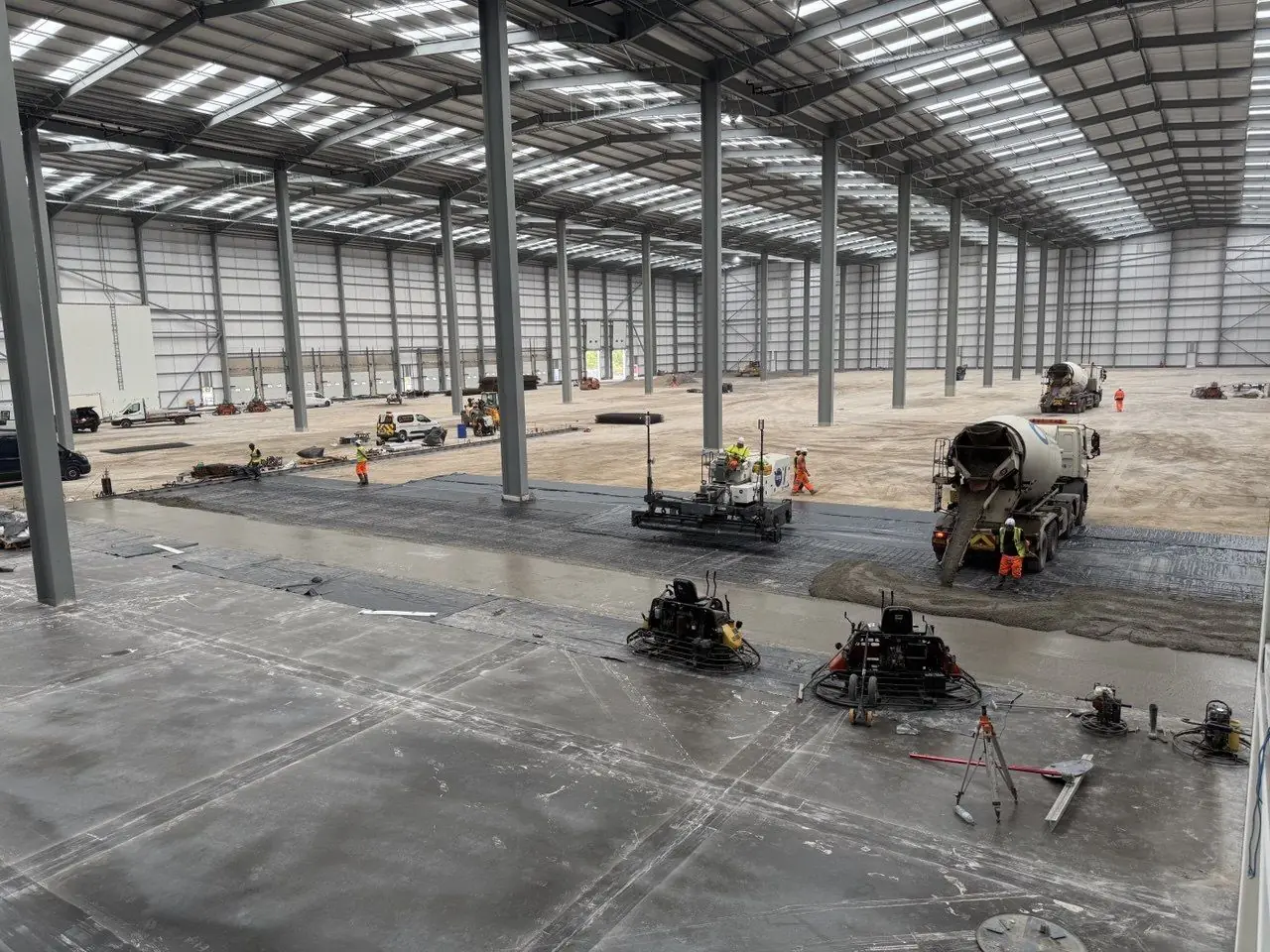
Delamination is the separation of a thin — typically 2–4 mm — trowelled layer from the concrete beneath it. It often goes unnoticed until the floor is trafficked, when hollow-sounding areas break away under load. Unlike a structural crack, delamination is usually a finishing-and-timing defect — which means it is usually preventable.
The mechanism
When the surface is closed by trowelling before bleed water and entrapped air have escaped, a sealed crust forms over a weak, moisture-rich layer. As the trapped water and air migrate upwards, they collect beneath the crust and break the bond. The slab can test perfectly for strength and still delaminate, because the defect lives in the top few millimetres.
- Hard trowelling too early seals the surface before bleeding has finished.
- Air trapped beneath the sealed crust forms a debonded plane.
- Entrained air, which slows bleeding, and fast surface drying both raise the risk.
- Dry-shake toppings add risk unless there is enough bleed water to wet them through.
The conditions that drive it
Delamination is a timing problem made worse by the environment. Wind, sun and low humidity stiffen the surface early; a cold subgrade, or a vapour membrane that prolongs bleeding, keeps the body of the slab plastic for longer. Each widens the gap between a surface that looks ready and a slab that actually is.
Delamination is rarely a strength problem. More often it's a timing decision — made with a trowel, too early.
Preventing it on site
Prevention is about reading the slab, not the clock. Independent QA/QC at the pour focuses on the finishing window because that is where the defect is either created or avoided.
- Don't start final trowelling until bleeding has stopped and the surface can take the operation.
- Don't use air-entrained concrete for power-trowelled floors — TR34 advises against it because of the high risk of delamination.
- Manage drying conditions — windbreaks, evaporation retarders — to keep surface and body in step.
- Sound-test suspect areas early, so any repair is scoped before the floor goes into service.
Further reading
- The Concrete Society, TR34 Concrete Industrial Ground Floors, 4th edition (2013, reprinted with amendments 2016)
- NRMCA, Concrete in Practice CIP 20 — Delamination of Troweled Surfaces
- ACI 302.1R-15 — Guide to Concrete Floor and Slab Construction