
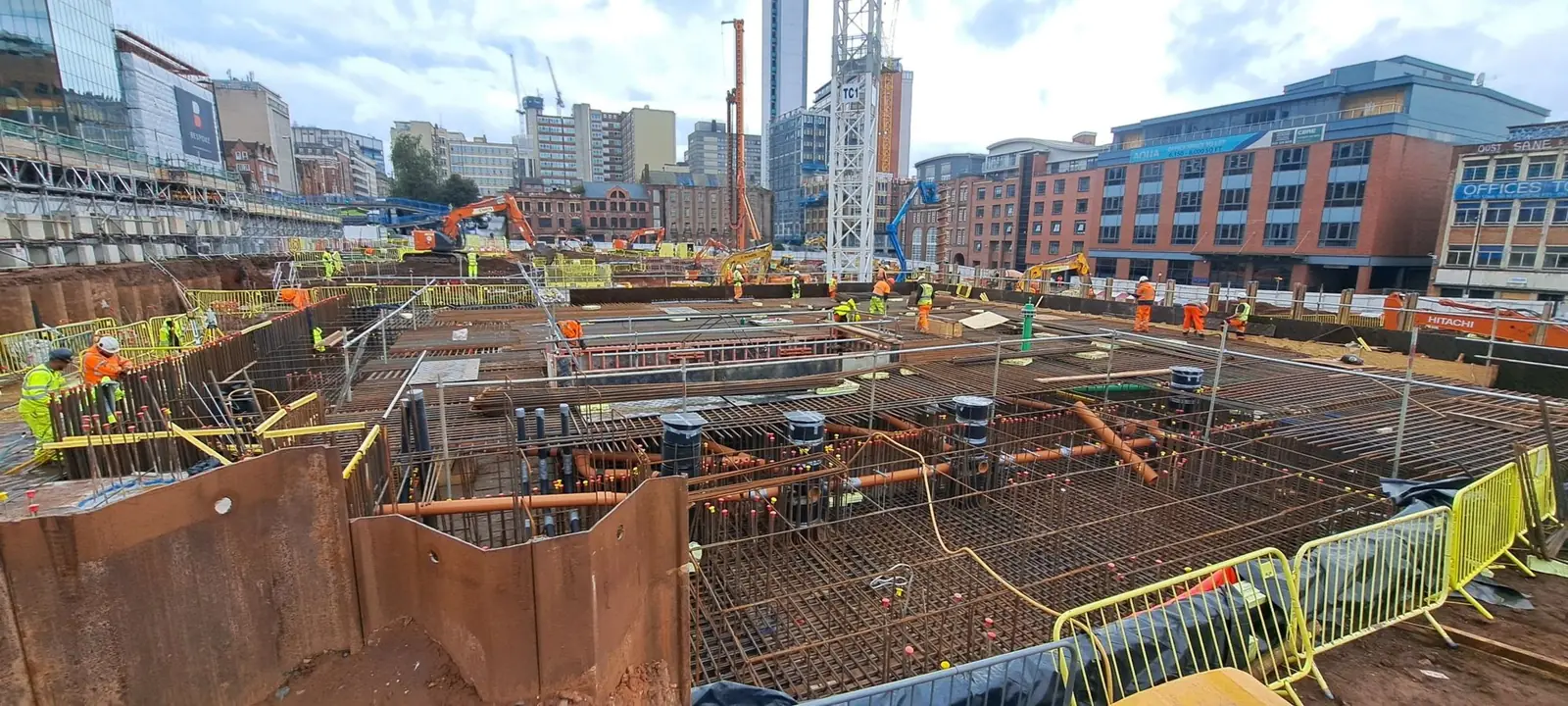
A reinforced concrete frame is unforgiving. Once the design and mix are fixed, much of what governs its long-term durability is decided on site, in the hours and days around each pour — and then sealed permanently inside the structure. Quality assurance on an RC frame is therefore not paperwork: it is the last point at which those decisions can be checked and corrected.
The three that decide durability
On site, three controls do most of the work in deciding whether a frame lasts its design life: concrete cover to the reinforcement, compaction of the placed concrete, and curing in the days after the pour. Each is invisible in the finished structure, and each is where independent QA earns its place.
- Cover protects the steel from carbonation and chloride ingress — too little, and corrosion can begin years earlier than the design assumed.
- Compaction removes the voids and honeycombing that compromise strength and durability.
- Curing develops the strength and density the mix was designed to deliver.
Why independence matters here
A contractor's own QA confirms the contractor's own work against the contractor's own programme. Independent QA verifies the same work against the specification with nothing riding on whether it passes — and it produces records made for the asset owner, not the installer.
On a concealed structure, the inspection record is the asset. If it wasn't captured at the time, it is hard to prove later.
What good QA captures
The value of independent oversight shows years later, when a question about the frame can be answered from records made at the time rather than from memory.
- Cover and reinforcement fixing verified before concealment, with photographs.
- Pour records — placement, compaction, concrete conformity — kept independently.
- Documented hold points with clear sign-off authority.
- A traceable audit trail that stands up in negotiation or dispute.
Further reading
- BS EN 13670:2009 — Execution of concrete structures
- BS 8500-1:2023 — Concrete: complementary British Standard to BS EN 206 (durability and cover)
- DIN EN 13670 with DIN 1045-3, and DIN EN 206 with DIN 1045-2 — German application rules
- BS EN 1992-1-1 (Eurocode 2) — Design of concrete structures, concrete cover